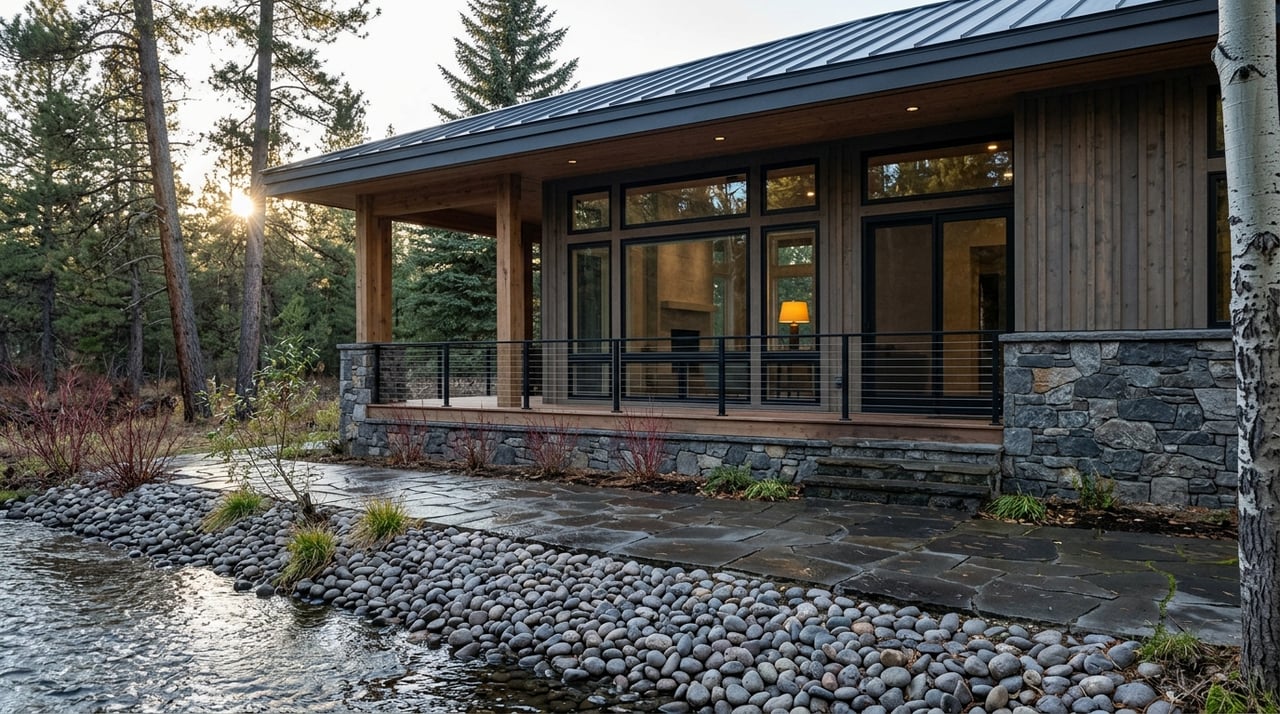
If the idea of stepping outside to the sound of moving water feels like your version of Montana living, Gallatin Canyon probably already has your attention. Riverfront property here offers a rare mix of scenery, recreation, and privacy, but it also comes with real questions about access, flood risk, road maintenance, and long-term costs. If you are weighing a purchase in the canyon, this guide will help you sort through the pros, the tradeoffs, and the numbers that matter most. Let’s dive in.
Why Gallatin Canyon Draws Buyers
Gallatin Canyon follows the Gallatin River along US 191, the main route connecting Bozeman to Yellowstone National Park and providing access to Big Sky, trailheads, campgrounds, ski areas, and recreation in the Gallatin National Forest. According to Montana Fish, Wildlife & Parks, the river runs about 44 miles through the canyon, with much of the upper drainage surrounded by public lands.
That setting is a big reason canyon properties stand out. You are not just buying a house or a lot. You are buying into a mountain corridor lifestyle shaped by river views, forest access, and close proximity to some of southwest Montana’s best-known outdoor recreation.
Direct access to outdoor living
The lifestyle benefits are easy to understand. The Gallatin Canyon and Highway 191 corridor is known for hiking, fishing, scenic drives, and access to public land, while Gallatin River access sites are also used for bird watching, picnicking, hiking, and wildlife viewing.
For many buyers, that means your free time can start right outside your door. Depending on the property, you may be near trailheads, formal river access points, or public land boundaries that make the canyon feel especially connected to the outdoors.
A strong recreation premium
The Gallatin River drainage supports wild trout fisheries, which adds to the appeal of properties near the water. Even when a home does not have extensive private frontage, proximity to a river with that kind of reputation can still shape demand and value.
This is one reason canyon inventory often attracts second-home buyers, outdoor-focused full-time residents, and land buyers who want a setting that feels immersive rather than suburban. The draw is as much about experience as it is about square footage.
What “Riverfront” Really Means
One of the most important questions in Gallatin Canyon is whether a property has true private river frontage or simply close proximity to public access. Those are not the same thing, and the difference matters.
Under Montana’s Stream Access Law, the public may use rivers and streams for recreation up to the ordinary high-water mark, but cannot cross private land to reach them. In practical terms, that means a home near the river may still share a recreational landscape with the public if there is nearby legal access, while private ownership does not give unrestricted control over the stream corridor below the high-water mark.
Check the access details carefully
When you look at canyon property, it helps to ask very direct questions such as:
- Does the parcel include deeded river frontage?
- Is the river physically accessible from the homesite?
- Is access private, shared, or across the street?
- Are there nearby public entry points through Montana FWP sites?
On the Gallatin, formal public access points include places such as Kirk Wildlife Refuge and Axtell Bridge. That can be a benefit if you want predictable legal access nearby, but it also means you should be clear-eyed about what you are and are not buying.
The Pros of Riverfront Living
Riverfront ownership in Gallatin Canyon can be incredibly rewarding for the right buyer. The setting is dramatic, the recreation is real, and the property mix can offer more privacy and land than you may find closer to resort core areas.
Scenery and privacy
Many canyon properties are tied closely to the landscape. Current and recent listing examples in the research include parcels with Forest Service land behind them, acreage near the Stormcastle trailhead, and larger tracts with creek, pond, or river frontage.
That kind of setting can create a strong sense of retreat. If you are looking for a home base that feels removed from the pace of town, the canyon can offer exactly that.
Land and utility flexibility
Another advantage is variety. The canyon does not offer one standard product type. Instead, you may find homes on acreage, buildable lots with septic systems in place, parcels with private wells, gated properties, or no-HOA land opportunities.
For buyers who want room to spread out, more autonomy, or a long-term land hold, that flexibility can be appealing. It also opens the door to property searches that are less focused on uniform neighborhoods and more focused on specific lifestyle priorities.
Relative value compared with Big Sky
Gallatin Canyon and nearby Gallatin Gateway are still premium markets, but they often compare favorably with Big Sky proper on price. As of February 28, 2026, Zillow reported a typical home value of about $1.82 million in Big Sky and about $1.10 million in Gallatin Gateway.
That does not make canyon property inexpensive. It does suggest, however, that some buyers may find a better fit here if they prioritize privacy, land, and river access over in-town resort convenience.
The Cons and Tradeoffs
The same features that make canyon living special can also make ownership more complex. This is not in-town living, and it helps to approach it with a practical mindset.
Mountain corridor logistics
Gallatin Canyon follows US 191, a major route with ongoing safety and infrastructure concerns. The Montana Department of Transportation notes that corridor projects in and around the area are tied to safety, bridge work, passing lanes, and wildlife-vehicle collision reduction through wildlife crossing improvements.
For you as a buyer, that means access is scenic but important to evaluate carefully. Daily driving, winter conditions, and the realities of a highway corridor can shape how a property feels in all four seasons.
Recreation is not identical year-round
The outdoor appeal is real, but it is not static. Montana FWP closes part of the Gallatin River to angling from December 1 to the third Saturday in May between Porcupine Creek Road and the West Fork confluence to protect wintering wildlife.
That does not reduce the beauty of the area, but it is a reminder that access and use can shift seasonally. If fishing access is central to your buying decision, you will want to understand those seasonal restrictions upfront.
Rural ownership comes with more systems
Many canyon properties rely on private infrastructure rather than town services. Depending on the parcel, that may include a septic system, private well, gravel road access, and either private or HOA-managed snow removal and road maintenance.
Those details are not necessarily negatives, but they do affect your budget and ownership experience. Before you buy, it is smart to confirm exactly who maintains roads, who handles plowing, and what utility systems are already in place.
The Costs to Plan For
Price is only part of the equation with riverfront property. In Gallatin Canyon, ownership costs can extend beyond the purchase price in ways that are easy to overlook during an initial search.
Purchase price and property type
Recent and current listing examples show a wide spread in property profiles. The research includes a 1.88-acre off-market home with 4,752 square feet and an estimated value around $2.506 million, a 20-acre gated home in Gallatin Canyon South listed at $2.8 million, and a 31.6-acre parcel with structures and water features estimated at $3.739 million.
At the same time, there are smaller land opportunities, including a 2.31-acre no-HOA parcel near the Stormcastle trailhead and a 2.0-acre Canyon South property with a 3-bedroom septic system and river access across the street. In other words, pricing varies widely based on frontage, improvements, acreage, and utility setup.
Flood insurance and floodplain review
Floodplain status is one of the biggest cost variables for riverfront property. Gallatin County says its floodplain boundaries are based on FEMA Flood Insurance Study data and Flood Insurance Rate Maps effective April 21, 2021, and its regulations use the 100-year flood standard to define regulated flood hazard areas.
If a property is in a Special Flood Hazard Area and you are using a federally backed mortgage, FEMA and the National Flood Insurance Program require flood insurance. FEMA also notes that map updates can affect both insurance requirements and premiums, so this is not a one-time box to check.
You can start by reviewing the county’s floodplain information and map resources early in the process.
Permits for bank work and improvements
If you are thinking ahead about erosion control, riprap, or bank stabilization, know that riverfront work can be regulated. The Gallatin Conservation District explains that Montana’s 310 Law permit process applies before any project that may physically alter or modify the bed or bank of a perennial stream, river, or spring.
That means improvements near the river may involve more than contractor bids. County floodplain review may also apply in regulated flood hazard areas, which can affect both timelines and total project cost.
Ongoing maintenance
Maintenance is often where canyon ownership becomes most different from a more conventional home purchase. HOA fees may cover road maintenance and snow removal in some communities, while no-HOA properties may leave more of that responsibility with you.
In addition, private wells, septic systems, and gravel roads all add upkeep considerations. These systems can be worthwhile tradeoffs for privacy and setting, but they should be part of your budget from day one.
How to Evaluate a Canyon Property
If you are seriously considering riverfront living in Gallatin Canyon, a few questions can help you compare options with more confidence.
Ask these before you buy
- Is the river access private, shared, or public nearby?
- Is the parcel in a regulated flood hazard area?
- Will your lender require flood insurance?
- Who manages road maintenance and snow removal?
- Is the road paved or gravel?
- Does the property rely on a well, septic system, or both?
- Are there HOA dues, and what do they cover?
- Would future riverbank work require permits or floodplain review?
These questions are especially important for second-home buyers, land buyers, and remote buyers who may not be on site year-round. In mountain property, the lifestyle is a major part of the value, but the operating details matter just as much.
Is Riverfront Living Worth It?
For the right buyer, yes. Gallatin Canyon offers a distinctive lifestyle built around water, open space, recreation, and a stronger sense of retreat than you may find in denser resort areas. It can also present compelling value when compared with Big Sky pricing, especially if land, privacy, and outdoor access are high on your list.
At the same time, this is a market where due diligence matters. Access rights, floodplain status, maintenance obligations, and permit requirements can all shape whether a property feels effortless or complicated after closing.
If you want help comparing Gallatin Canyon opportunities with Big Sky, Gallatin Gateway, or nearby land options, Callie Pecunies can help you evaluate the lifestyle fit and the practical details so you can buy with clarity.
FAQs
What does riverfront living in Gallatin Canyon usually mean for access?
- In Gallatin Canyon, riverfront can mean deeded frontage, shared access, or simply proximity to formal public entry points, so you should confirm exactly what kind of water access a property includes.
What should buyers know about flood insurance for Gallatin Canyon property?
- If a property is in a Special Flood Hazard Area and you have a federally backed mortgage, flood insurance is generally required, and map updates can change future requirements and premiums.
What maintenance costs are common for Gallatin Canyon homes?
- Common ownership costs can include septic and well service, gravel road upkeep, snow removal, and in some communities HOA fees for road maintenance.
What permits might apply to riverbank work in Gallatin Canyon?
- Work that alters the bed or bank of a perennial stream or river may require a Montana 310 permit, and some projects may also need county floodplain review.
How do Gallatin Canyon prices compare with Big Sky prices?
- Based on the research snapshot, Gallatin Gateway pricing generally benchmarks below Big Sky, which can make the canyon appealing if you want more land or privacy with less emphasis on resort-core convenience.