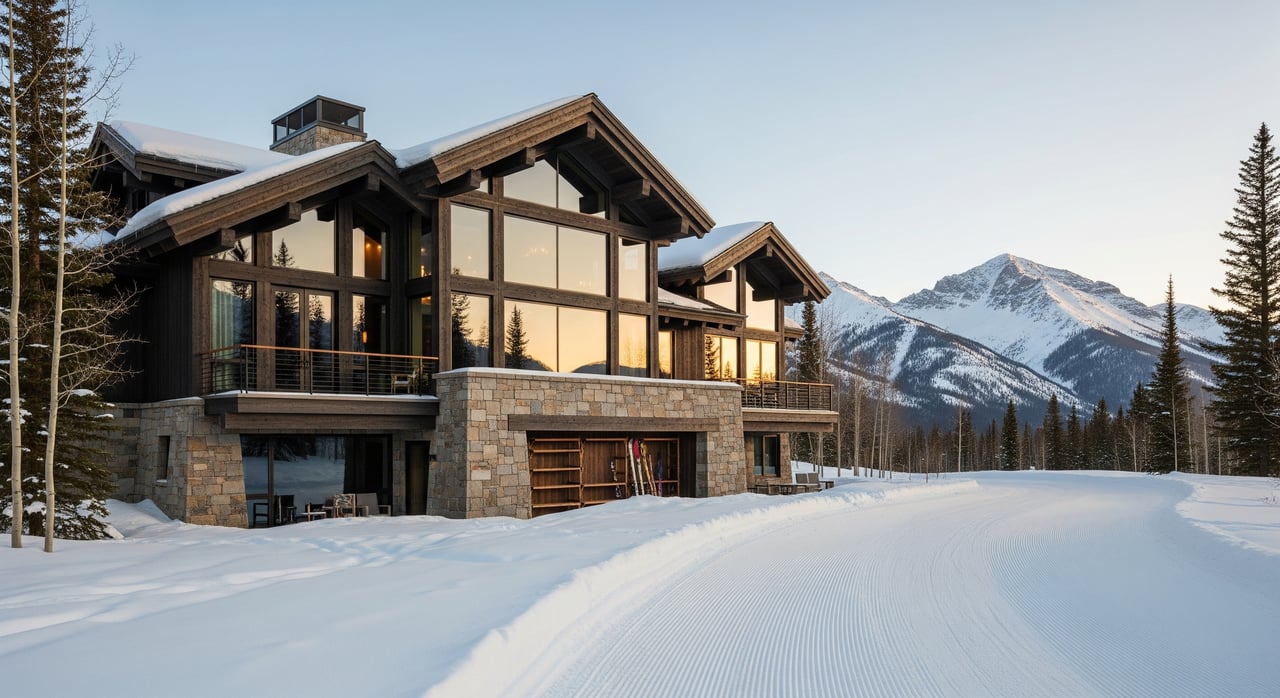
You have probably seen “ski-in/ski-out” used on Big Sky listings and wondered if it really means you can click in at the door and glide to a lift. In Mountain Village, the answer depends on the exact building, the route, and even the day’s grooming. If you are buying for lifestyle, rental potential, or easy family days on snow, these details matter. In this guide, you will learn what the terms truly mean, how Mountain Village is laid out, what to verify with the resort and HOAs, and how access type can affect value and daily living. Let’s dive in.
Define ski-in/ski-out
True slopeside
This is the strict version most buyers picture. You move from your building directly onto a resort-maintained, designated ski run and can glide to a lift without taking off your skis or crossing a plowed road. Typical signs include a door from a ski room to a groomed trail, a private ski gate, or a building that sits on a groomed corridor. For current routes and grooming priorities, confirm with the Big Sky Resort trail map and grooming report.
Ski-to or ski-from
This broader usage covers properties that are very close, but the route may include a short flat or slightly uphill connector, a brief walk across a plaza, or a road crossing where you remove skis. The experience is convenient, but not the same as a door-to-lift glide. Many listings market this as “ski access” or “near the slopes,” which can be accurate if the route is short and manageable.
Ski adjacent or near slopes
You are within a short walk or a quick shuttle ride to lift access, but there is no direct on-snow connection. You will carry gear or rely on winter transportation. In Mountain Village, shuttles often make this practical for families and guests, especially during peak weeks. For visitor logistics and shuttle context, start with Visit Big Sky.
Why the difference matters
- Daily convenience and spontaneity, especially with kids or mixed-ability groups.
- Safety and comfort on icy mornings versus a groomed corridor.
- Storage needs, like boot rooms, ski lockers, and de-icing systems.
- Market perception and pricing. Many buyers equate “ski-in/ski-out” with true slopeside, while sellers sometimes use looser terms. For consumer context on how the market talks about ski access, check general resources like Realtor.com.
Mountain Village access patterns
Mountain Village is Big Sky’s primary base with lodging, condos, dining, and lifts that feed a web of runs and connectors. Some buildings sit right on groomed corridors. Others are a connector or two away, separated by a plaza or a plowed road. Because the base is a mix of lifts, plazas, and easements, the lived experience varies building by building.
Common barriers to true slopeside
- Plowed roads or driveways between the building and the snow.
- Short connector segments that are not always groomed or can be slick.
- Resort plazas or terminals where on-snow travel is restricted.
These small interruptions are what shift a property from true slopeside to ski-to or ski-from.
Shuttles and walkability
Resort and community shuttles help many Mountain Village owners and guests reach lifts without driving. If you plan to depend on the shuttle, confirm pick-up points, frequency, and capacity for peak and shoulder seasons with building management or the resort. Visitor resources at Visit Big Sky are a useful starting point.
Differences by building type
- Buildings on groomed runs usually deliver the most seamless access and are often purpose-built for it.
- Newer condos or townhomes may offer a short connector or plaza walk that works well for most skiers.
- Some properties lean on shuttles and strong gear storage to deliver a practical, near-slopes lifestyle at a different price point.
Snow operations and access
Your on-snow experience depends on daily operations. Big Sky Resort grooms designated runs and connectors based on conditions and priorities, and not every connector is groomed every night. Snowmaking typically concentrates on base areas and high-traffic corridors, with exact coverage varying by season. For current terrain, lift status, and grooming details, refer to Big Sky Resort. For broader industry practices on grooming, snowmaking, and avalanche control, the National Ski Areas Association provides helpful background.
At the property level, HOAs handle plowing and de-icing of walkways, entries, and parking. Knowing who clears what, and how often, can be the difference between a pleasant walk and a slippery start to your day.
HOAs and easements to review
The most convenient experiences often exist because of recorded easements and clear maintenance agreements. Before you write an offer, request and review:
- HOA CC&Rs, bylaws, winter maintenance schedules, and budgets for snow removal.
- Documents that define any private ski corridors or access gates and who maintains them.
- Rules on ski storage, boot cleaning, and skis in common areas.
- Parking policies for owners and guests during peak weeks.
- Rental guidelines that affect personal use and returns.
- Liability details for common-area ski corridors.
- Recorded easements and rights-of-way from Gallatin County property records.
If a route crosses resort property, ask for the agreement that allows skiing across that land and who maintains the surface through the season.
Value and lifestyle trade-offs
Most buyers will pay more for true, unobstructed slopeside access relative to similar units that require a short walk or a shuttle. The premium varies by building, size, condition, and market timing. Clear, verifiable on-slope routes also help resale because they are easier to explain and photograph. Ambiguous “ski access” claims need maps, photos, and documents that prove the route and maintenance.
Convenience sometimes brings higher operating costs. HOAs that fund shuttle service, robust snow removal, or heated walks may charge higher monthly fees. Buildings with boot dryers, exterior ski lockers, or de-icing systems deliver comfort and speed, but they also add maintenance and replacement costs.
Lenders and appraisers consider ski access a qualitative amenity. Appraisals rely on comparable sales that describe the same level of access, which makes documentation and prior sold examples important when you finance a purchase.
Winter due diligence checklist
Before you commit, test the lifestyle you are buying. If possible, visit in winter and do the real route in boots.
- Time the morning routine. Go from the unit door to the nearest lift as you would on a ski day. Note any uphill stretches, steps, or slippery surfaces.
- Confirm grooming. Check if the adjacent run or connector is groomed daily on the Big Sky Resort grooming report, and watch it over a few days.
- Check snowmaking coverage. Early and late season access often depends on it. Verify the coverage with resort maps and operations.
- Test night and morning. See how lighting, temperature, and traffic affect safety and comfort.
- Evaluate shuttle use. Find the stop, review timing in peak and shoulder seasons, and ride it at least once.
- Photograph the route. Capture the door to the snow, any stairs or paths, signage, and the nearest lift terminal.
- Request documents. Ask for HOA CC&Rs and winter contracts, recorded easements from Gallatin County, and any resort or HOA access agreements.
Describe ski access clearly
Precise, verifiable language prevents surprises and builds trust. Ask the listing agent for an exact route description you can verify on site.
- “Direct ski-out from the building’s ski room to a groomed connector. Two-minute ski to the lift plaza.”
- “Short walk across the resort plaza to the lift. Skis on shoulders. No road crossings.”
- “Ski-to route requires crossing a plowed driveway. Skis off for 30 feet.”
Back up these lines with photos and a simple diagram that labels the unit, route, any crossings, and the nearest lift. Include distances or time estimates and note any early or late season detours.
Mountain Village buyer profiles
Your priorities shape what feels “worth it.”
- Frequent skiers and families often want minimal transition time and gear storage that keeps mornings smooth.
- Occasional skiers and investors may prefer a short walk or shuttle in exchange for price, parking, or larger living areas.
- Hosts who entertain non-skiers will value parking access, plazas, and easy navigation for guests as much as the snow route.
There is no single right answer. The best fit is the property that supports the way you actually ski and live.
Partner with a local expert
Ski access in Mountain Village is hyper local, and operations change with weather and the season. A clear-eyed, on-snow verification paired with the right documents will protect your purchase and elevate your winter days. If you want tailored guidance, curated touring, and a route-by-route breakdown for the buildings you are considering, connect with Callie Pecunies. You will get boutique, hands-on representation with deep resort knowledge and premium visual documentation that makes choices easy.
FAQs
What does “ski-in/ski-out” mean in Big Sky?
- Buyers typically expect to stay on skis from the door to a lift or a groomed connector without removing skis or crossing plowed roads. Ask for a demonstration and documents that confirm the route.
How do shuttles affect ski access in Mountain Village?
- Shuttles make near-slopes properties practical by reducing the need to drive to lifts. Confirm pickup points, schedules, and capacity with building management or resort resources like Visit Big Sky.
Who maintains ski corridors and walkways at condos?
- HOAs usually handle plowed walkways and common entries. Confirm scope, frequency, and contractor details in the HOA CC&Rs and winter maintenance budget.
Will grooming or snowmaking change my route during the season?
- Yes. Early and late season or low-snow periods can shift practical access. Verify grooming priorities and coverage with Big Sky Resort and review snowmaking maps for your route.
Does slopeside access guarantee better resale?
- It usually increases desirability and can command a premium, but value depends on market timing, unit condition, operating costs, and clear documentation of access.