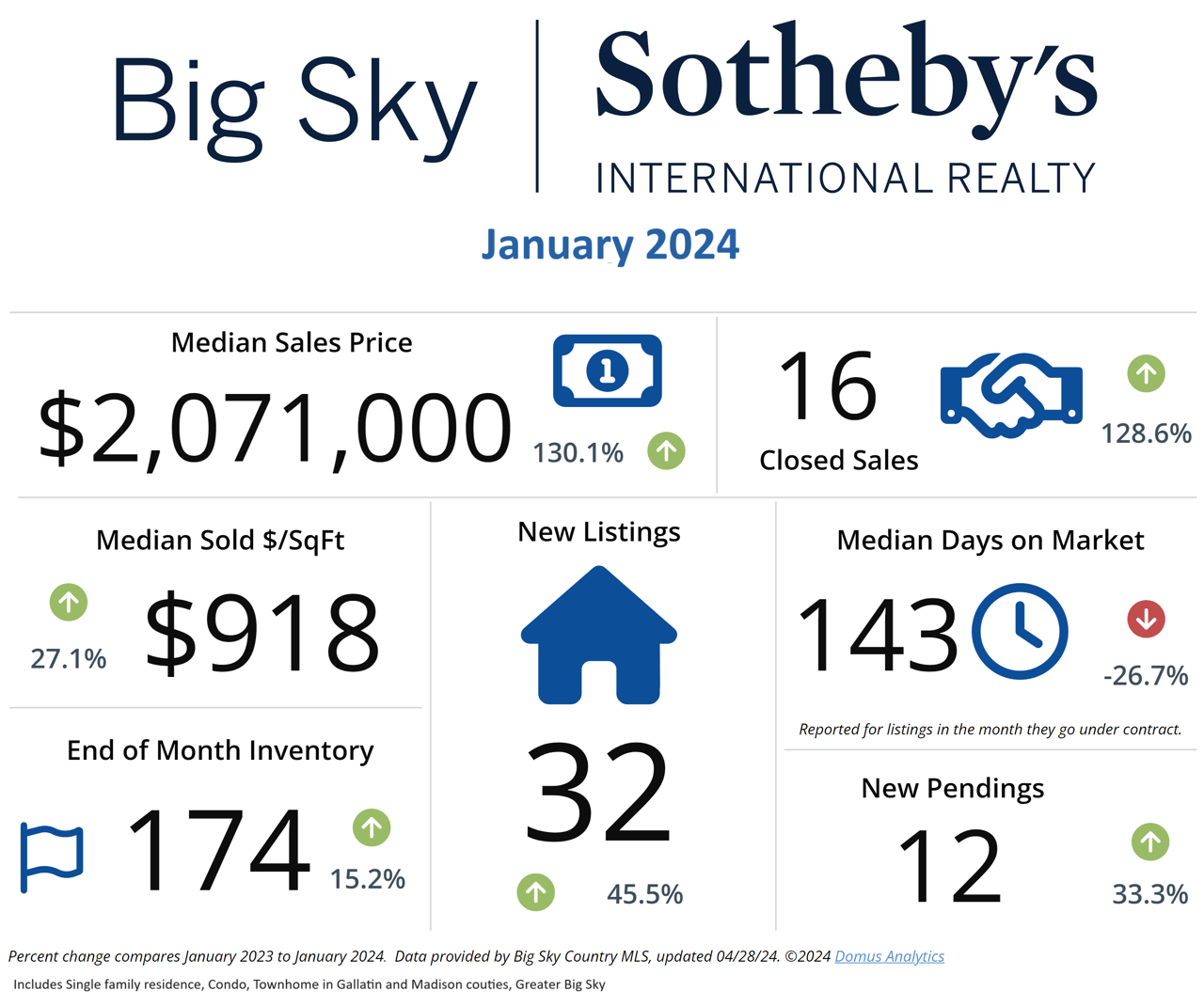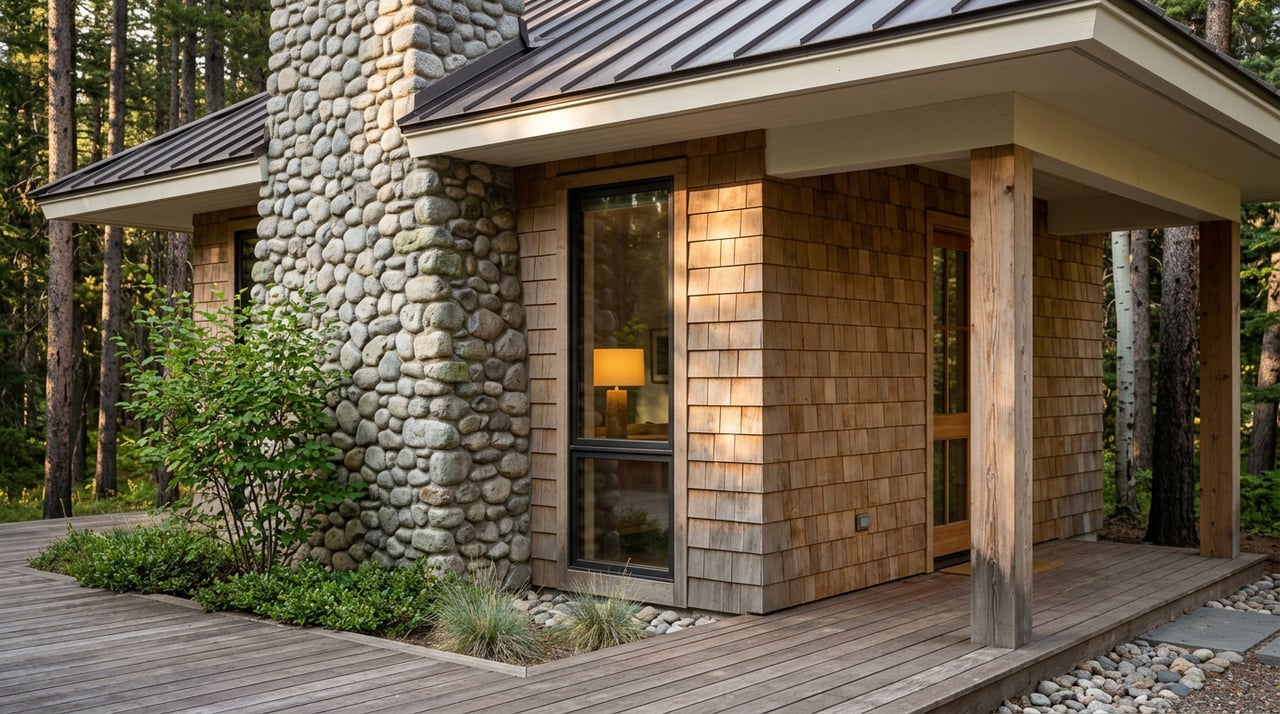
The Canyon looks like the value play in Big Sky. A four bedroom near Ramshorn View shows up around $1.375M, riverfront acreage sits well below the March 2026 Big Sky median of $2.545M, and the drive to the lifts is a straight shot up US 191. On a per-square-foot basis, the math is real.
The math is also incomplete. A Canyon parcel today is not a static asset. It is a position inside three infrastructure transitions that are all moving at once, and where your specific address falls inside those transitions changes the five-year carrying cost more than the list price does. I write offers in this corridor, and the friction almost always shows up in the same places.
The friction shows up in escrow, not on the listing
Almost every Canyon transaction I work touches the same short list of items that never appear in the marketing copy:
- Septic system age, drainfield location, and permit history. The Canyon has no central sewer today. Per the Gallatin County Capital Improvements plan, wastewater in the Canyon is handled entirely by septic, with flows historically estimated around 77,000 gallons per day.
- Well yield, water rights, and depth to the shallow aquifer. A Montana Bureau of Mines & Geology study released in April 2025 concluded the aquifer along US 191 near the Big Sky turnoff is shallow, unconfined, and vulnerable to contamination.
- Access easements and USFS-adjacent boundaries on parcels that back into Custer Gallatin National Forest or the Porcupine Wilderness Study Area.
- Highway 191 noise and driveway sight distance, which look very different in July than they do at 7:15 a.m. on a February powder day.
- Wildfire defensible space on wooded lots between Storm Castle Road and the Lava Lake trailhead.
None of these are dealbreakers. They are line items. But they compound with the two bigger transitions below, and that is where the real thesis lives.
The sewer line is drawing a boundary you can see on a map
The Gallatin Canyon County Water & Sewer District is designing a five mile sewer main that would collect septic effluent from properties along US 191 near the Gallatin River and pump it up the MT 64 corridor to Big Sky's new Water Resource Recovery Facility, which produces Class A-1 reclaimed water. In plain terms, a large share of Canyon homes would eventually disconnect from their septic systems and connect to a central sewer.
The scale is not theoretical. Reporting in Explore Big Sky places the first phase between the 191/64 intersection and Buck's T-4, with roughly 156 septic systems potentially coming offline and 8,000 pounds of annual wastewater loading removed from the aquifer. If the sewer expands further south toward the Big Sky School District and Riverhouse BBQ and Events, overall cost would be roughly $70 million. A 2022 project estimate of $42 million has since climbed to about $50 million, and voters approved a $12 million canyon sewer commitment as part of a broader resort-tax package. DEQ approved a June 2025 deviation to run the sewer and reuse pipeline in the same trench along MT 64, and in December 2025 Upper Missouri Waterkeeper filed suit against DEQ arguing the phased approvals skipped public participation. In late February 2026, two Gallatin County Commissioners signed a letter asking DEQ to complete a full Montana Environmental Policy Act review.
For a buyer, this is not political theater. It is a map:
| Parcel location relative to phase 1 | What it likely means for you |
|---|---|
| Inside the 191/64 to Buck's T-4 corridor | Higher probability of a future connection fee, likely earlier timing, potential for septic replacement to be avoided |
| Between Buck's T-4 and the Big Sky School District | Later phase, more uncertainty on both timing and cost |
| South of the school district or well outside the corridor | Septic remains the long-term plan, and any replacement or upgrade is on the owner |
The connection fee is the number nobody has yet. To achieve buy-in, the biggest hurdle will be reducing connection fees. Especially in existing developments like the Ramshorn View subdivision, just south of the initial phase boundary, where septic is already a sunk cost to property owners, the district will need funding to subsidize connection fees. When I underwrite a Canyon home for a client, I model three scenarios: no connection, a subsidized connection in the low five figures, and an unsubsidized connection materially higher. The list price is the same in all three. The cost of ownership is not.
The 2026 construction season, translated for buyers
The second transition is the road itself. The Montana Department of Transportation is executing the US 191/MT 64 Optimization Plan, a rolling set of projects with a combined estimate around $370 million. The stretch from Four Corners to Big Sky averaged roughly 140 crashes per year between 2019 and 2021, with 412 total, and a corridor study logged 52 crashes at the S-curve near the Lava Lake trailhead alone.
For a buyer looking at Canyon inventory this summer, translation matters more than the headline number:
| Project | Window | What a Canyon owner should expect |
|---|---|---|
| Big Sky North pavement work | 2026 construction season | Reduced speeds, lane closures, some night work between Storm Castle Road and Lava Lake |
| Turn Bay North of Gallatin Gateway | Started mid-March 2026 | Left-turn bay, shoulder widening, bridge-to-box-culvert replacement with temporary detour |
| South of Spanish Creek pavement | Late May through July | Signal-controlled one-way traffic, night operations to reduce daytime impact |
| Markley (Green) Bridge replacement | Winter/early spring 2026 into summer | Access to Deer Creek Trailhead may be affected during work |
| US 191 / MT 64 intersection | Grant application pending | Preliminary designs point toward a roundabout sized for trucks and trailers |
| Lava Lake structures | Timing uncertain | $70 to $80 million and still unfunded, per MDT |
If your buying thesis rests on a predictable weekday commute to Bozeman, the 2026 season is not the year you plan around. If your thesis is second-home use with weekends bracketed by Friday evening arrivals and Sunday afternoon departures, the disruption is a mild inconvenience. Same corridor, different buyer, very different lived experience.
What the aquifer study changed about new inventory
The third transition is regulatory posture. On April 29, 2025, Montana DEQ approved the Residential Quarry Phase II subdivision, a 45 unit condominium project on 37 acres roughly a quarter mile west of the Gallatin River. The approval came days after the Montana Bureau of Mines & Geology released its shallow-aquifer report, and it arrived while the middle Gallatin remains classified as impaired for nitrogen and phosphorus since 2023.
DEQ's approval was conditional in a way that matters to buyers. In accordance with the Platting and Planning PUD approval, the Applicant must connect to the Gallatin Canyon Water & Sewer District once it is constructed. New Canyon inventory is being platted on the assumption that the sewer gets built. If you are underwriting a brand-new condo or a resale in one of these newer PUDs, the sewer timeline is not a future amenity. It is baked into the entitlements.
Kristin Gardner, chief executive of the Gallatin River Task Force, has publicly backed the centralized-sewer project as the highest-impact water-quality intervention available to the community. Mace Mangold of WGM Group, the district's lead engineer, has framed the economics as a straightforward scale problem: the more properties buy in, the lower the per-connection cost. Both statements sit in the public record. Neither settles the question of what any specific owner will actually pay.
Reading a Canyon listing against a Mountain Village listing
A one bedroom Mountain Village condo at $995,000 and a $1.375M Canyon home look like two different asset classes because they are. What the Canyon price gets you that the condo does not: land, river or forest adjacency, no ski-resort HOA, and privacy. What the condo gets you that the Canyon home does not: central water and sewer, snow removal, a shorter walk to the lifts, and a maintenance envelope that is somebody else's problem.
The Canyon is not the discount version of Mountain Village. It is a different product, priced against a different set of frictions, and the frictions are moving.
The buyers who do well in the Canyon are the ones who model those frictions before they write the offer. Order the septic pumping and inspection records early. Pull the well log. Ask the listing agent, in writing, whether the property sits inside the phase 1 sewer boundary. Check the Karst webcam at mile marker 55 on a February morning before you decide the commute is workable. Drive the corridor once during a weekday MDT closure window. If the property is a new PUD unit, read the entitlement conditions for language obligating a future sewer connection.
FAQ
Is the Gallatin Canyon sewer definitely going to be built?
Design has advanced to the 60% milestone on the canyon pipeline and lift station per Big Sky Water & Sewer District materials, DEQ has awarded the trench deviation, and the groundwater discharge permit package is ready to submit. That is meaningful momentum. It is not a construction start. Litigation from Upper Missouri Waterkeeper and the county commissioners' MEPA request in February 2026 introduce timing risk, not existential risk.
Will the highway work hurt Canyon property values?
Short answer, I do not think so, and MDT's project framing treats safety and reliability as long-run positives for the corridor. The 2026 season is a friction year during construction. Historically, corridor improvements on 191 have preceded, not followed, price appreciation.
Does a private septic system make a Canyon home harder to sell?
Only if it is old, undocumented, or sized wrong for the home's current use. Documented, recently pumped, and permitted systems clear diligence quickly. The transition risk lives in the connection-fee unknown, not in the septic itself.
What about the Markley (Green) Bridge closure?
Work is scheduled to begin in winter or early spring 2026 and extend into summer, coordinated among the Bozeman Ranger District, MDT, and Montana Fish, Wildlife and Parks. Access to the Deer Creek Trailhead may be affected. If your parcel relies on that specific access, factor it into your summer plans, not your offer.
Before you write the offer
The Canyon is one of the last places in the Big Sky footprint where a buyer can still trade convenience for land, river, and quiet. The list price is the beginning of the underwriting, not the end. If you are weighing a specific property and want a parcel-level read on where it sits inside the sewer phasing, the MDT schedule, and the septic diligence load, that is the work I do every week. Reach out to Callie Pecunies for a personalized Canyon market read or to walk a specific listing with someone who has already priced in the moving parts.